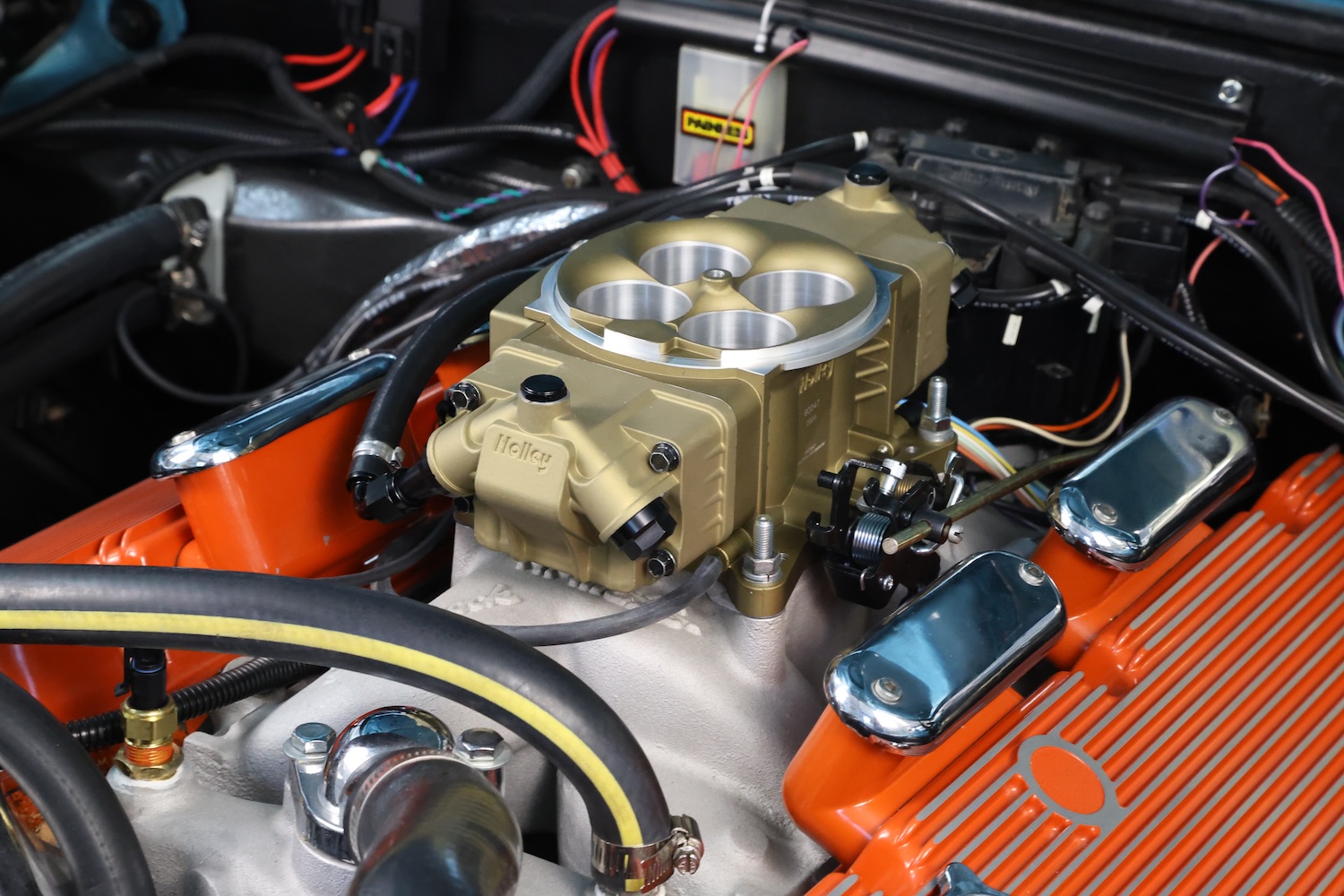
Carburetors used to be king in the classic car world. Now, modern EFI swap systems promise modern drivability and control way beyond what yesterday’s jets and floats could deliver, and they offer it in small, bolt-on packages that are aimed directly at the classic car market.
Is the hype real? Can a modern EFI system really breathe new life into a classic car via a bolt-on kit and an afternoon’s worth or work, or is this just an expensive way to add complexity to your classic car?
With that question in mind, here’s a clear look at what modern EFI really brings to the classic car world — and a clear set of questions that should help you decide if an EFI upgrade makes sense for your own older car.
Comfort Zone
I spent years working as a mechanic on pre-1975 vehicles and have run Holley, Edelbrock and Quadrajet carburetors on my own classic cars and trucks. But I’ve also installed a half-dozen EFI systems on classic cars, including three Holley EFI systems on my own vehicles and one on this 1968 Camaro for Summit Racing’s blog.
I’ve found benefits and problems with every style of fueling system, both classic and modern. None of it is perfect… not OEM carburetors from the 1960s, not aftermarket carburetors from the 1980s and 1990s, and certainly not any of the modern EFI systems being sold today.
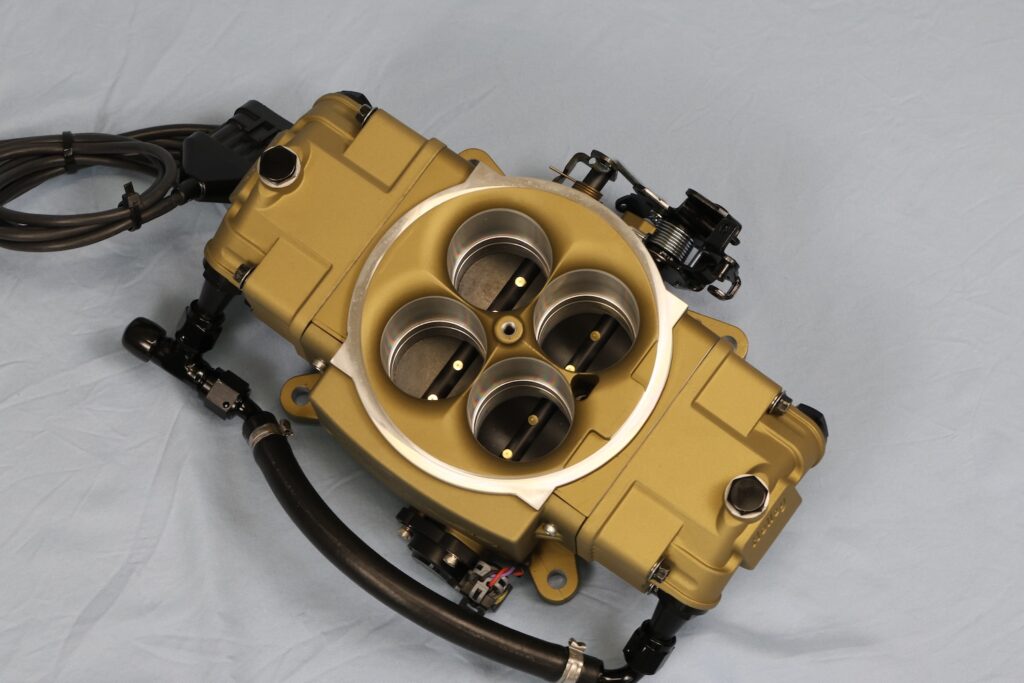
That means that there isn’t one single right answer for every classic car owner, despite what you might read in glossy marketing materials from Holley, Edelbrock, FiTech or Aces EFI — or in forum or social media posts from frustrated owners who can’t get their cars to work right. The overall truth is this: complexity here is subjective, and how much trouble something will be depends almost entirely upon the car’s owner.
Here’s an example: a carburetor that’s dumping fuel up out of the vent tube and onto the intake manifold probably isn’t going to phase a 70-year-old Baby Boomer in terms of what to do to solve it. They’ve probably dealt with a stuck float before and know to tap on the carburetor with a screwdriver handle to free it up. But figuring out why a Holley Sniper EFI system won’t idle suddenly? Expect lost looks and anxiety from that owner. But a classic car owner in their 20s? They’d probably have an opposite reaction to those same exact situations.
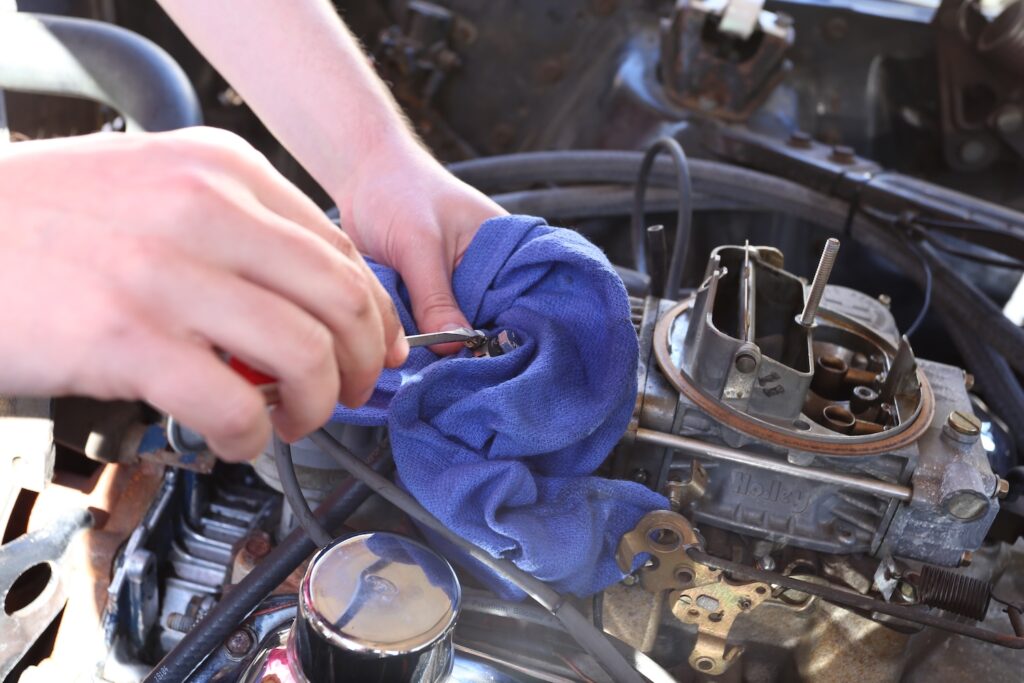
So the first thing to consider here is comfort zone. As an owner, what are you willing to learn and how stressed out will you be about it when things go wrong? Regardless of whether we’re talking about a set of lazy vacuum secondaries or a frozen idle air control motor, things will go wrong with every classic car eventually. If trying to problem-solve EFI on the side of the road stresses you out, you have two choices: learn how to do it or stick with that carb. There’s nothing wrong with old tech if it works the way you want it to.
But if you grew up after the era of the carburetor, maybe with a modern Civic hatch as your first car, that old Holley 4-barrel may seem like voodoo science. Are you willing to learn its mechanical quirks and tricks? Trust me… there are some. If not, a modern EFI swap is for you.
Or maybe you just want a set-it-and-forget-it solution for your 1960s muscle car or truck regardless of your background. EFI can give you that.
Potential versus reality
A properly set up carburetor has the potential to be fantastic on a classic car. When it’s dialed, it’ll start easy, idle well and have plenty of power without drivability issues. But finding a great carburetor tuner is a challenge these days, and years of wear can cause carburetor quirks that even the best mechanic or tuner may have a hard time solving.
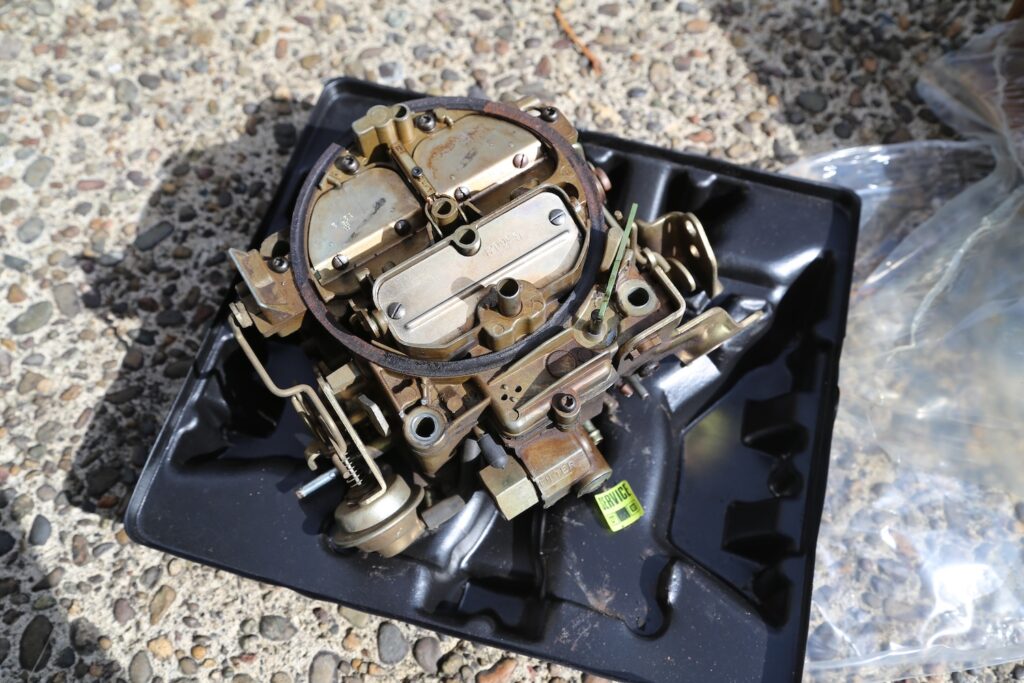
Take GM’s Q-jet as an example — the little-primary huge-secondary stock carb that was used on a bunch of muscle cars, trucks, wagons and more from the 1960s through the 1980s. Those carbs are the closest thing to EFI in terms of crisp drivability when set up correctly, but over years of use, they tend to develop vacuum leaks at the primary or secondary throttle shafts where those shafts pass through the soft metal of the carburetor base plate. That results in unmetered air entering the engine, which causes a lean issue and messes with drivability in strange ways.
Every carburetor design will have problems over time, even if it’s just related to dried out accelerator pumps or gaskets, plugged jets or orifices or caustic ethanol fuels.
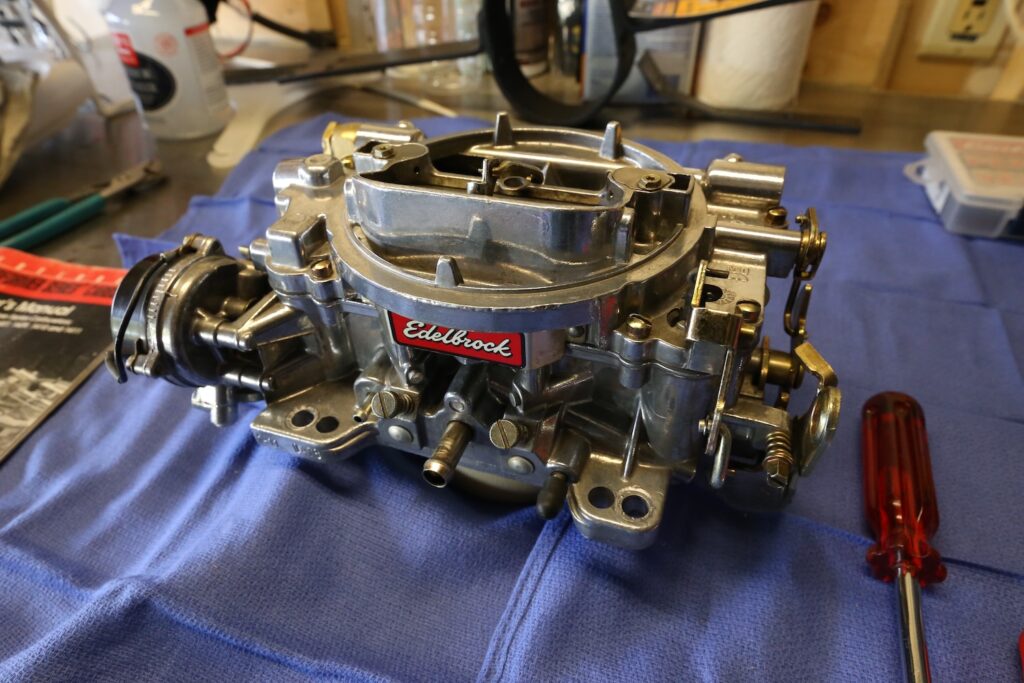
Age-related issues aside, the major downside to a carburetor is that it isn’t dynamic. You can’t adjust the mixture screws from the driver’s seat. One mixture setting needs to account for different ambient temperatures, different altitudes, different fuel quality and a bunch of other variables. So your fueling can get close to what the engine wants, but it isn’t always going to be ideal in every situation. Hence, quirks. Add the age issues in on top of that and you’ll be facing some troubleshooting on a relatively consistent basis.
The fundamental benefit of EFI is that unlike a carb, it can adjust itself in real-time based off load, temperature, fuel quality, altitude and more. That means it has the potential to offer even better drivability over that carburetor, but those benefits aren’t as plug-and-play as most of the aftermarket EFI suppliers would lead to you to believe. They come at a cost.
In both cases, chasing down potential will take time and money. So the question is this: are you willing to spend moremoney up front for the incremental improvements of EFI, or would you rather chase a carburetor’s tune around and learn the old ways of fuel optimization?
There’s no right answer to that… only your answer.
Cost
That last question matters more than you may think, though, because the cost to convert a carbureted V8 from the 1960s is significant.
Let’s take a look at that, starting with something simple like a 302 Ford V8 in a ’68 Mustang. Say you want to get something that looks stock, so you choose a Holley Sniper Stealth system, which currently lists for $1,649.95 on Holley’s website. That system comes with the throttle body and ECU combination, the wiring, the sensors and the handheld tuner. But that’s only the beginning.
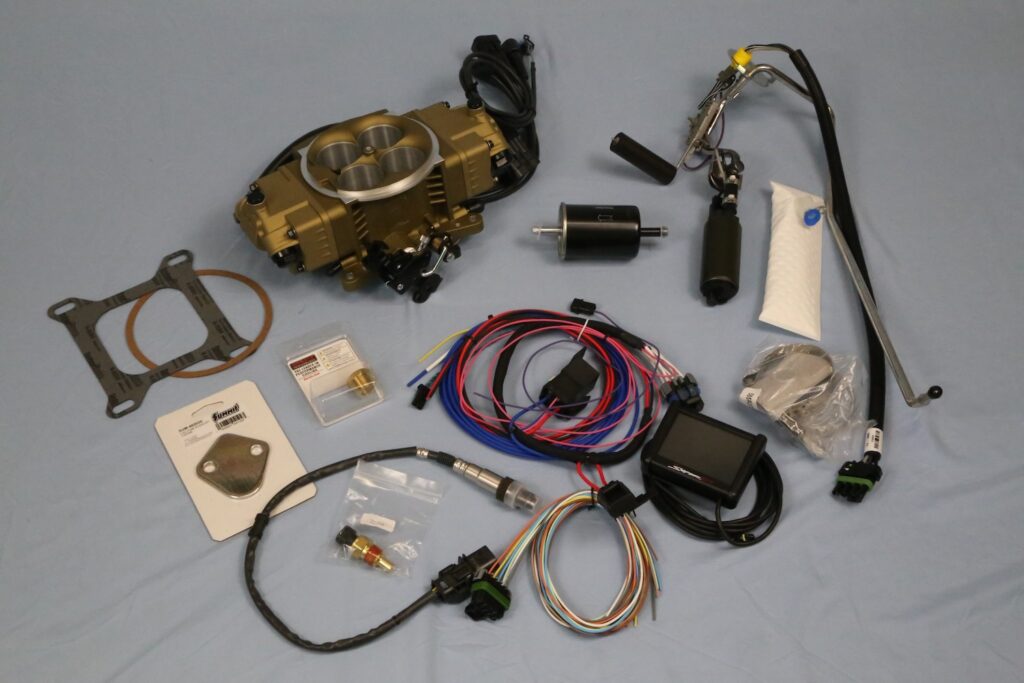
What it doesn’t include is a fuel supply system, which must be capable of delivering 60 PSI of fuel to the injectors. You’ll need new feed and return fuel lines (preferably steel), some way to get the fuel in and out of the tank (bulkhead fittings and a Holley Hydramat), an external electronic fuel pump mounted in-line, a fuel pressure regulator and a gauge, a fuel filter capable of 60 PSI, and all the assorted fittings and connectors to make that all work. You’re looking at another $400 easy just in those parts, and once you get it all done, you’ll probably realize it isn’t the ideal setup.
Why isn’t it ideal? Since the 1980s, every auto manufacturer has placed their electric fuel pumps inside of their fuel tanks because the fuel in the tank helps to cool the pump. That change of location extends fuel pump reliability considerably — and considering the warm days that usually prompt old car use, it’s an important thing to consider for your car, too.
Holley’s got you covered, though, as they offer drop-in modules that work with Mustang tanks and place the pump down in the fuel. For $531.95, you can get a returnless drop-in module that goes inside your original fuel tank and has a built-in regulator and that you can plumb using your original fuel line (with some modification). Plan on another $100 in parts to make that work — EFI hose, clamps, fittings, filters, etc. This is what I did with that Camaro. Or you can go one step further and look to Tanks Inc or Aeromotive for a complete, baffled, modern fuel tank and pump assembly that’s engineered to fit in your car. Prices vary, but plan on one of those tanks costing more than the Holley module — and you’ll need to run a feed and return line, as well as that external regulator.
And once that’s all done, you still need to go find a reputable tuner to make the system work after it’s installed.
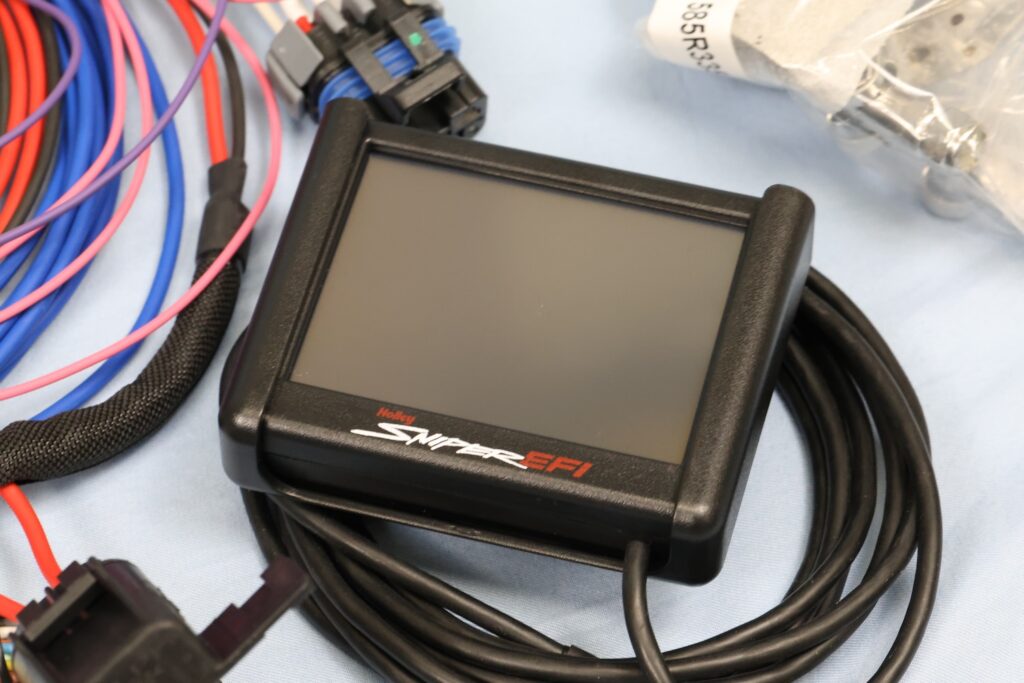
Holley’s systems, like all the others on the market today, are marketed as self-learning, which is true to an extent — they’ll adjust themselves based on parameters that you set, but the real benefits aren’t unlocked without a pro tuner working off a laptop and running the car on a dyno. The last time I paid for that service, which included both timing and fueling adjustments, it cost me over $800 and took the better part of a day. Is that spend required to get you running? No. But if you’re already spending the money for modern tech, it makes a lot of sense to just go for it and get it right.
So a basic setup is now almost $3,100 — and that doesn’t take into account other changes that you might want to make.
Is your charging system up to snuff, putting out enough power to run injectors and the fuel pump at low idle? Oldschool alternators from the 1960s don’t always put out a lot of amperage at idle, so that could be a problem. Plan on another $300 or so to upgrade the alternator and the wiring. Want to use the integrated electric fan control inside Holley’s software? You’ll need the fan(s) and the fan wiring. A good fan is at least $200, and the wiring is another $40 or so. Holley can also control timing events using its Hyperspark distributor, which is fantastic in terms of timing control, but it’s another $1k.
If you do all that, this simple setup has snowballed out to $4,600 or so, not including labor.
If you thought $1,600 was already pushing it for what a $500 carburetor could do, now things have really gone nuts.
Is any of this actually worth it?
Benefits
All this illustrates the one truth we can’t avoid: a carburetor will always be the simpler and cheaper choice over EFI. That’s just a fact. And if you set one up properly, you’ll have minimal issues with your car’s drivability. But you will have to make periodic adjustments without the benefit of a computer to do it for you, and you’ll always wonder if there’s a little more adjustment or a little more benefit on the table. You can add a wideband oxygen sensor, though, which will give you real-time information on how the car is really running… and then you can tune things to match based off the numbers that you see: 12.5 AFRs are good for full throttle, while 14.2 is on the rich side of good for a clean idle, and 14.7 to somewhere in the 15s is OK for a clean low-load cruise. Getting there will be a mishmash of fuel jets, metering rods, springs, mixture screws and more, depending on the carb in question. But once you do get there, you’ll have a great understanding of how your carburetor works, and you’ll know what to do to fix it when problems do eventually show up.
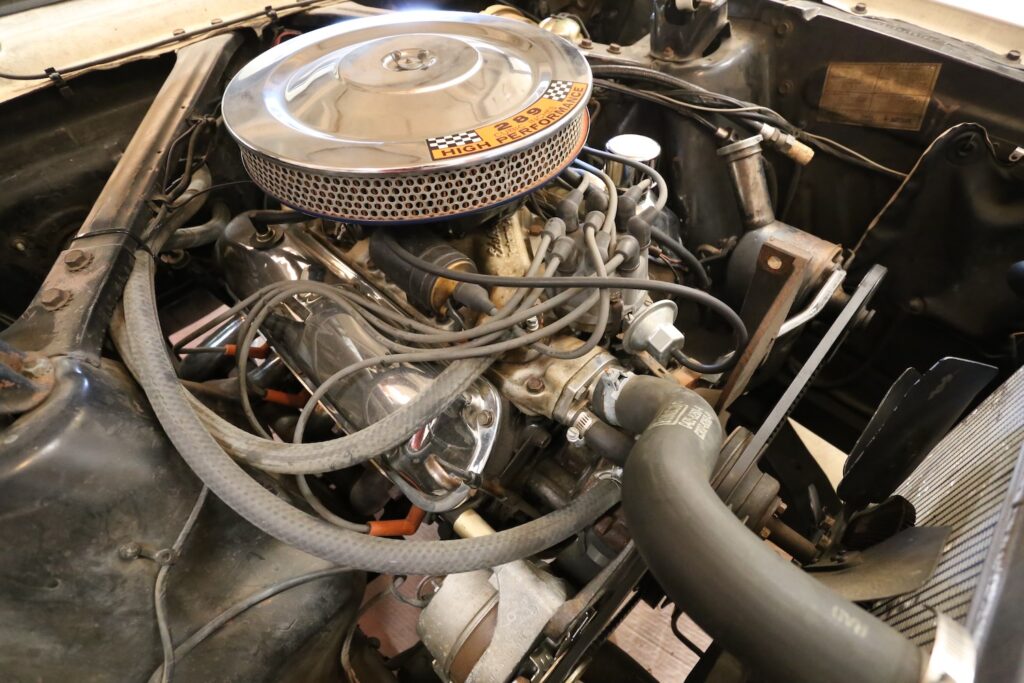
Overall, the limiting factor there will be you.
EFI isn’t a magic bullet, though. It doesn’t remove the guesswork, at least not at first. It’s a lot more expensive than you might initially believe, and the outcome will rely completely on your installation and setup. It won’t eliminate quirks — instead, they’ll evolve, and if you’re a carburetor expert already, you’ll have to evolve, too — but there’s a large group of EFI converts out there that will be willing to help you sort out your issues, starting with the company that manufactured your setup. Get anything with the EFI install wrong and you’ll have headaches. Use EFI to cover up other mechanical issues and you’ll have problems. But get it right and you’ll have excellent cold starts, unmatched drivability, great fuel economy and more full-throttle power. Hitting those target AFRs means making keystrokes rather than turning screwdrivers. So you can see why these systems have become so popular over the past decade.
In the end, all that really matters is getting a system in place that makes you want to drive your car more. Carb or EFI, if that’s the end result, then I think whatever money spent is worth it.
Your mileage may vary.

Leave a Reply